
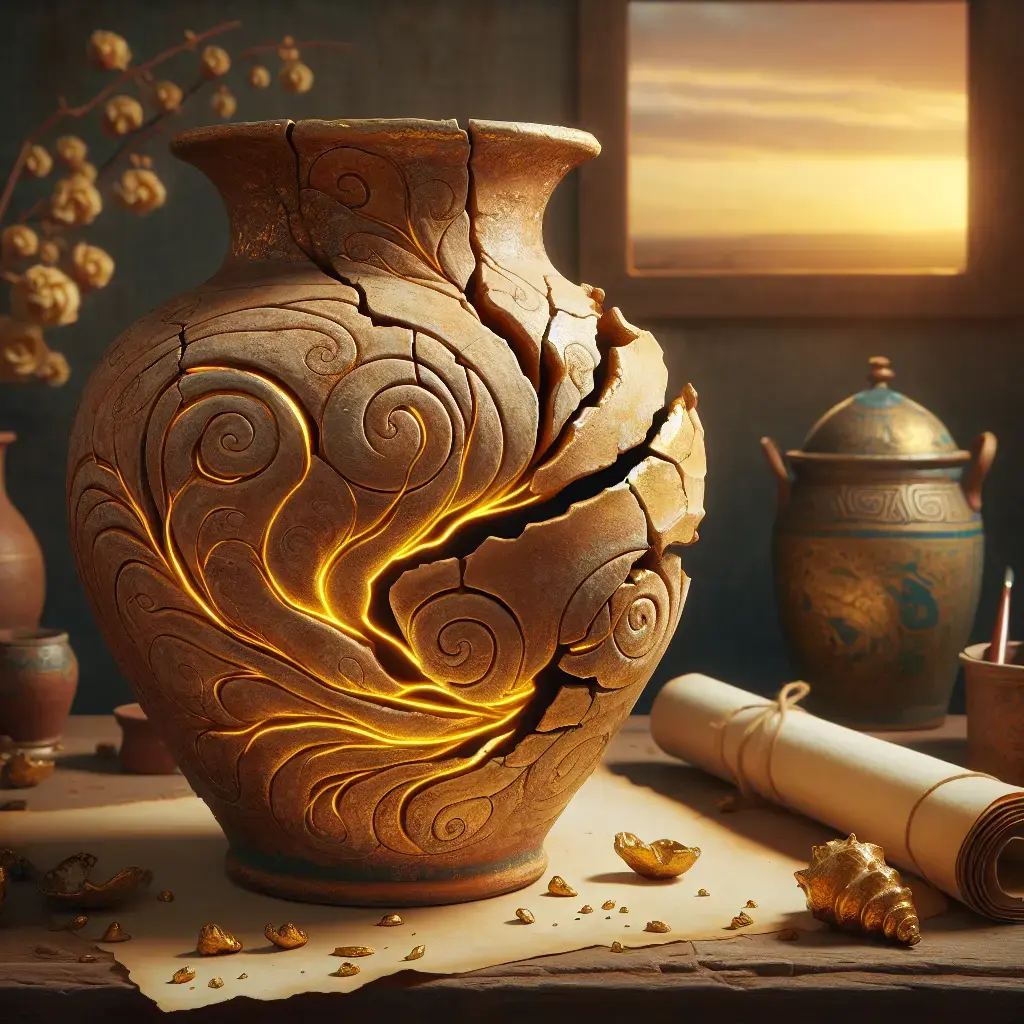
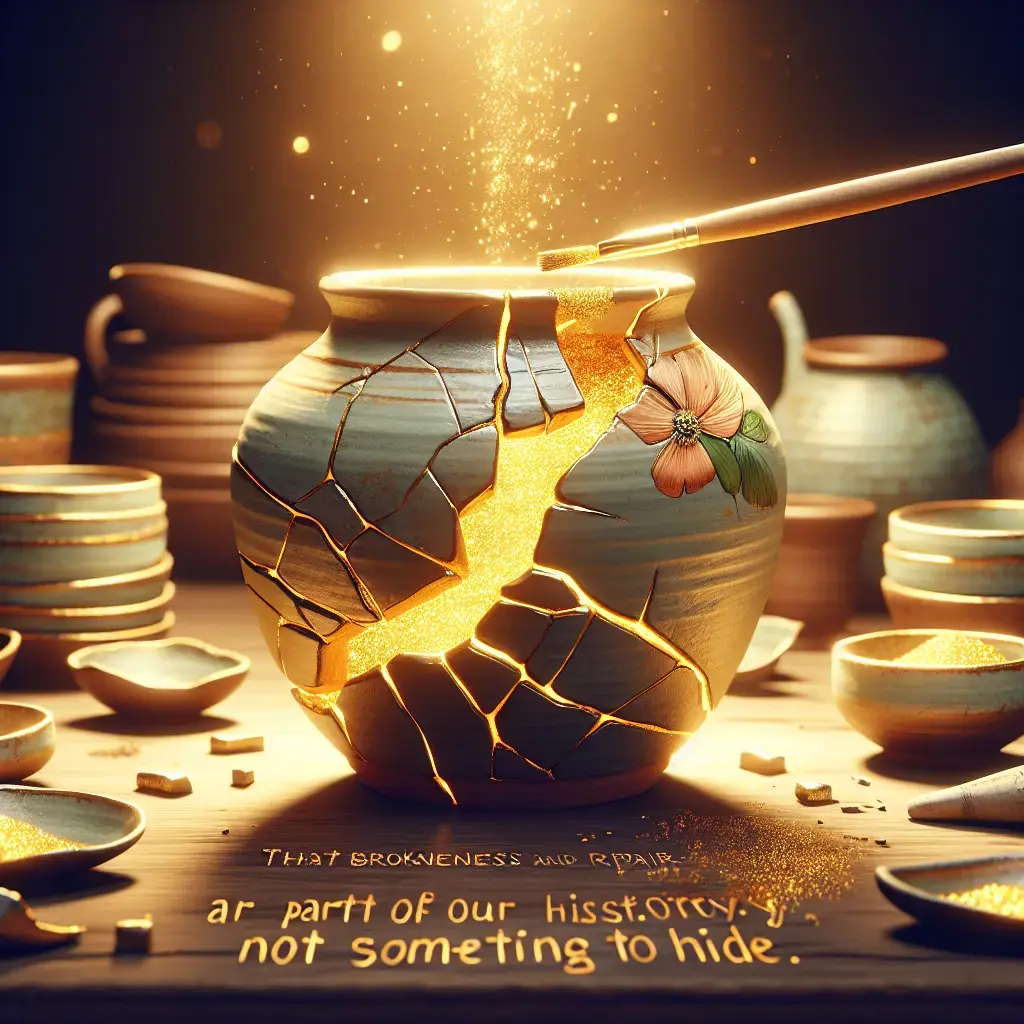
In the intricate world of fashion, where trends are born and fade with the seasons, a timeless Japanese philosophy offers profound insights into personal growth and resilience. The art of Kintsugi, the Japanese method of repairing pottery with lacquer mixed with powdered gold, silver, or platinum, serves as a compelling metaphor for embracing imperfections and finding beauty in brokenness. The Kintsugi metaphor transcends its origins, offering valuable life lessons on healing and personal development. By focusing on the Japanese art of repair, we discover how personal growth through Kintsugi teaches us to value resilience and transformation, celebrating the scars and stories that make us unique.
Just as Kintsugi pottery repair highlights the elegance found in mended cracks, fashion inspired by Kintsugi encourages us to embrace our flaws as facets of our individuality. This intersection of Kintsugi and fashion showcases how the Kintsugi style can symbolize strength and renewal, much like the pieces it restores. The philosophy behind Kintsugi is not just an art form but a pathway to self-improvement and mindfulness, inviting us to adopt a perspective where our challenges become our strengths.
Exploring the connection between Kintsugi and personal development reveals a journey of acceptance and resilience, analogous to fashion's transformative power. The art of Kintsugi not only repairs pottery but also mends the spirit, offering a unique lens through which we view our lives. As we delve into this captivating philosophy, let us uncover how Japanese philosophy in fashion and resilience can inspire us to cultivate a deeper understanding of our own beautiful narratives.
Kintsugi as a Metaphor for Personal Growth and Resilience
In the fast-paced world we inhabit, where change is the only constant, the Kintsugi metaphor offers a refreshing perspective on personal growth and resilience. This ancient Japanese art of repair, characterized by mending broken pottery with lacquer dusted with powdered gold, silver, or platinum, extends beyond its physical practice to embody profound life lessons. It encourages us to embrace imperfections, find beauty in brokenness, and appreciate the narrative that each scar tells.
The Kintsugi Philosophy and Personal Development
At the heart of the Kintsugi philosophy lies the acceptance of imperfections as integral parts of our identity. This notion stands in stark contrast to the often-pursued perfectionism in contemporary society. By acknowledging our flaws, we engage in a form of self-compassion that fosters personal growth through Kintsugi. A recent study published in the Journal of Positive Psychology source illustrates how individuals who practice self-acceptance report higher levels of psychological well-being and resilience.
This philosophy is not merely abstract; it has practical implications for personal development. Consider the experience of renowned author Haruki Murakami, who likens his writing process to Kintsugi. Murakami's approach involves embracing narrative imperfections, allowing his stories to develop organically. His literary success underscores how Kintsugi-style acceptance can fuel creativity and transformation.
Fashion inspired by Kintsugi is an emerging trend that beautifully encapsulates this philosophy. Designers are increasingly integrating the Kintsugi style into their collections, using visible seams and patchwork to celebrate individuality and resilience. The Spring 2024 collection from Tokyo-based designer Hiroko Takahashi source exemplifies this trend, featuring garments with bold, gold-dusted stitches that echo the art of Kintsugi pottery repair.
This approach challenges conventional norms by redefining beauty standards in fashion. It invites consumers to see garments as dynamic narratives rather than static objects. By wearing Kintsugi-inspired fashion, individuals symbolically express their own journey of healing with Kintsugi, embracing their unique experiences as part of their identity.
Kintsugi in Mental Health and Therapy
Kintsugi's impact extends beyond aesthetics and enters the realm of mental health and therapy. Therapists are increasingly using the Kintsugi metaphor to aid clients in healing from trauma and adversity. A 2023 article in Psychology Today source discusses how therapists incorporate Kintsugi mindfulness practices to help patients reframe their experiences. By focusing on the beauty in brokenness, clients learn to view their scars not as defects but as symbols of survival and strength.
Such therapeutic applications highlight the potential of Kintsugi in personal development, offering a pathway to self-improvement that honors individual history while fostering resilience and Kintsugi-inspired transformation.
Several case studies illuminate the transformative power of the Kintsugi philosophy. In one instance, a community initiative in Fukushima, Japan—devastated by the 2011 nuclear disaster—has adopted Kintsugi as a symbol of recovery source. Local artisans conduct workshops where residents repair pottery as part of their collective healing process. This initiative demonstrates how embracing imperfections can rebuild not only objects but also community resilience and spirit.
Another compelling example is found in corporate settings, where leaders use Kintsugi as a metaphor to navigate organizational change. Companies like Toyota have implemented programs that encourage employees to view challenges as opportunities for growth, inspired by the Japanese art of repair source. This approach fosters a culture where mistakes are seen as learning experiences rather than failures.
The Art of Kintsugi in Daily Life
Incorporating the art of Kintsugi into daily life involves cultivating mindfulness and acceptance. Simple practices such as journaling about personal struggles and triumphs or engaging in creative activities like pottery can reinforce resilience and Kintsugi-inspired growth. A New York Times feature source highlights how individuals use these techniques to build mental fortitude and embrace life's ebbs and flows.
By adopting these practices, we invite the beauty of brokenness into our lives, recognizing that each crack is not a flaw but a testament to our journey. This perspective shift is essential for fostering resilience and finding strength in adversity.
The intersection of fashion and resilience is further evidenced by collaborations between designers and mental health advocates. Initiatives like "Fashion for Mental Health," which debuted at Paris Fashion Week 2024 source, use the platform to promote awareness and destigmatize conversations about mental health. These events highlight how fashion can serve as a powerful medium for conveying messages of healing with Kintsugi and resilience.
In these contexts, fashion becomes more than clothing; it is a narrative canvas that tells stories of overcoming adversity, much like the repaired pottery that symbolizes strength and renewal.
As we continue to explore the myriad ways in which the Kintsugi philosophy influences personal growth and resilience, it becomes clear that this journey is ongoing. The lessons of Kintsugi invite us to continually embrace our imperfections, appreciate our scars, and recognize the beauty inherent in our unique narratives.
The insights derived from this Japanese philosophy offer profound implications not only for individuals but also for communities and industries. By integrating these principles into various facets of life—from fashion to mental health—we can cultivate a culture that values resilience, transformation, and the enduring beauty found in brokenness.
In embracing the Kintsugi philosophy, we discover a powerful metaphor for personal growth and resilience, urging us to cherish our imperfections and celebrate the beauty found in life's inevitable cracks. This ancient Japanese art teaches us to:
- Accept Imperfections: By acknowledging flaws as integral aspects of our identity, we foster self-compassion and resilience, as supported by research in positive psychology.
- Inspire Creativity: As exemplified by Haruki Murakami and the fashion industry, embracing narrative and aesthetic imperfections can spark creativity and transformation.
- Promote Healing: Kintsugi's principles are applied in therapy to help individuals reframe trauma and view scars as symbols of strength.
- Foster Community Resilience: Initiatives in places like Fukushima demonstrate how embracing imperfections can rebuild both objects and community spirit.
- Encourage Organizational Growth: Companies like Toyota utilize Kintsugi to see challenges as growth opportunities, cultivating a culture that values learning over perfection.
By integrating Kintsugi's lessons into daily life, from journaling to creative endeavors, we nurture mindfulness and acceptance. Fashion becomes a narrative canvas that conveys resilience, promoting mental health awareness and dialogue.
As we continue to explore Kintsugi's influence across various facets of life, let us welcome the beauty of brokenness into our journeys. I invite you to reflect on your experiences with embracing imperfection and resilience. How has the art of Kintsugi shaped your perspective? Share your thoughts and stories in the comments below—your journey adds to the tapestry of collective growth.
Wishing you strength and beauty in every golden seam,

Leave a Comment